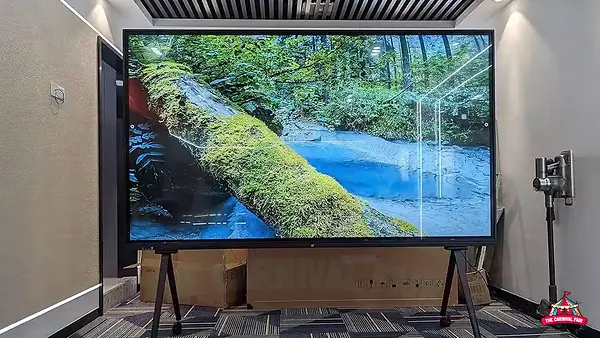
Shipping Television and Display Screens Internationally from China

ให้ที่อยู่คลังสินค้าจีนของเราแก่ซัพพลายเออร์ของคุณในประเทศจีนเพื่อให้พวกเขาส่งสินค้าของคุณไปสำหรับการจัดส่งระหว่างประเทศ
About Buying Television and Display Screens from China
Buying Televisions and Display Screens from China: A Complete Guide to Suppliers, Technology, Quality, Costs and Shipping
China is one of the world's most important manufacturing and sourcing hubs for televisions, monitors, commercial displays, digital signage, LED screens and other display products. Buyers can source everything from standard smart TVs and computer monitors to large-format commercial displays, interactive screens, video walls and customized OEM display systems.
For importers, retailers, distributors, hospitality businesses, offices, schools, advertising companies and project buyers, sourcing televisions and display screens from China can provide access to a very wide range of specifications and price points. China also has extensive supply chains for LCD panels, LED backlights, display modules, mainboards, power supplies, speakers, housings, stands, packaging and other components.
However, buying a television or display screen from China is different from buying a relatively simple consumer product. The screen itself may be only one part of a much larger technical system. Panel quality, resolution, refresh rate, operating system, power requirements, tuner standards, software, firmware, warranty support, packaging and shipping requirements can all affect the actual value of the product.
This guide explains how to buy televisions and display screens from China, how to find and evaluate Chinese suppliers, what specifications to compare, how to check quality, which certifications may be required, how to negotiate with manufacturers, and how to arrange international shipping.
Why Buy Televisions and Display Screens from China?
China has a mature electronics manufacturing ecosystem that supports both high-volume consumer products and highly customized commercial display projects.
A buyer sourcing from China may be able to choose from:
• Smart TVs
• LED TVs
• LCD TVs
• OLED TVs
• Mini LED TVs
• QLED and quantum-dot displays
• 4K and 8K displays
• Computer monitors
• Gaming monitors
• Portable monitors
• Commercial displays
• Digital signage screens
• Outdoor displays
• Interactive displays
• Touchscreen displays
• Video wall systems
• Large-format displays
• Advertising screens
• Hospitality TVs
• Hotel TVs
• Conference-room displays
• Educational displays
• Retail displays
• Self-service kiosk displays
• LED advertising screens
• Customized display modules
• OEM televisions
• Private-label televisions
• Replacement display panels and modules
China's manufacturing ecosystem also makes it possible to customize many aspects of a display product, including screen size, housing design, logo, operating system, remote control, packaging, software interface, ports, mounting system and other specifications.
What Types of Televisions and Displays Can You Buy from China?
Before contacting suppliers, determine exactly what type of display you need. "TV" and "display screen" can describe very different products.
Smart TVs
Smart TVs combine a display panel with a processor, operating system, networking capabilities and applications.
Common specifications include:
• 32-inch, 43-inch, 50-inch, 55-inch, 65-inch, 75-inch, 85-inch and larger screens
• Full HD
• 4K UHD
• 8K
• Wi-Fi
• Bluetooth
• HDMI
• USB
• Ethernet
• Built-in speakers
• Streaming applications
• Voice control
• Screen casting
For commercial buyers, it is important to verify exactly which operating system and applications are included rather than assuming that a television described as "smart" will support every application available in the buyer's market.
LED and LCD TVs
Many televisions marketed as LED TVs are technically LCD displays using LED backlighting.
When comparing suppliers, ask whether "LED" refers to the backlight technology or whether the supplier is describing another type of display technology.
Important specifications include:
• Panel type
• Resolution
• Brightness
• Contrast
• Refresh rate
• Viewing angle
• Color performance
• Backlight type
• HDR support
• Response time
OLED TVs
OLED displays use self-emissive pixels rather than a conventional LCD backlight.
They can offer characteristics such as very deep blacks, high contrast and thin designs, but buyers should pay particular attention to price, panel sourcing, burn-in considerations, warranty terms and intended usage.
For commercial installations where static images may remain on screen for long periods, the buyer should specifically discuss suitability with the manufacturer.
Mini LED and Quantum-Dot Displays
Mini LED and quantum-dot technologies are increasingly used in higher-end displays.
These technologies can affect:
• Brightness
• Contrast
• Color reproduction
• HDR performance
• Local dimming
• Energy consumption
• Price
Do not compare displays purely based on marketing terminology. Ask suppliers for measurable specifications and test samples where image quality is important.
Computer Monitors
Chinese factories manufacture monitors for:
• Office use
• Gaming
• Graphic design
• Video editing
• Professional applications
• Industrial use
• Retail
• Education
• Medical and specialized applications
Important specifications include:
• Screen size
• Resolution
• Refresh rate
• Response time
• Panel technology
• Brightness
• Color gamut
• Color accuracy
• Adaptive sync
• HDMI/DisplayPort/USB-C
• USB hub
• Height adjustment
• VESA mounting
• Built-in speakers
Commercial Displays and Digital Signage
Commercial displays are often designed for businesses rather than residential consumers.
They may be used in:
• Shopping malls
• Restaurants
• Hotels
• Airports
• Train stations
• Schools
• Hospitals
• Corporate offices
• Retail stores
• Exhibition centers
• Museums
• Advertising installations
Commercial displays can include higher brightness, professional mounting systems, remote management capabilities, extended operating hours and specialized software.
The requirements for a commercial display may therefore be very different from those of a household television.
Interactive Displays
Interactive flat panels are increasingly used in:
• Schools
• Meeting rooms
• Training centers
• Universities
• Corporate offices
• Government facilities
• Presentation environments
Features may include:
• Touch input
• Stylus support
• Android or another embedded operating system
• Windows compatibility
• Wireless screen sharing
• Built-in microphones
• Speakers
• Cameras
• Whiteboard software
• USB-C
• HDMI
• OPS computer compatibility
For these products, software compatibility can be just as important as the display hardware.
Understanding Television and Display Specifications
One of the biggest mistakes when sourcing from China is comparing products based only on screen size and price.
A 55-inch television costing substantially less than another 55-inch television may have a completely different panel, processor, operating system, brightness level, speaker system and software package.
Screen Size
Screen size is generally measured diagonally.
Common sizes include:
• 32 inches
• 40 inches
• 43 inches
• 50 inches
• 55 inches
• 65 inches
• 75 inches
• 85 inches
• 98 inches
• 100 inches and above
For large displays, also request the actual dimensions including the frame, stand and packaging.
This information is essential for freight calculations.
Resolution
Common resolutions include:
HD: approximately 1280 × 720 pixels
Full HD: 1920 × 1080 pixels
4K UHD: 3840 × 2160 pixels
8K: 7680 × 4320 pixels
Higher resolution can provide greater image detail, but resolution alone does not determine overall image quality.
Panel quality, processing, brightness, contrast, color reproduction and source content also matter.
Refresh Rate
Refresh rate is measured in hertz (Hz).
Common specifications include:
• 60 Hz
• 75 Hz
• 100/120 Hz
• 144 Hz
• 165 Hz
• 240 Hz
• Higher rates for specialized gaming displays
Gaming buyers should be particularly careful when checking whether the stated refresh rate is native, interpolated or dependent on a specific input resolution.
Brightness
Brightness is usually expressed in nits or cd/m².
Brightness becomes particularly important for:
• Outdoor displays
• Shop windows
• Advertising displays
• Public information screens
• Bright conference rooms
A screen intended for outdoor digital signage should not be compared directly with an ordinary indoor television.
HDR
High Dynamic Range can improve the difference between dark and bright areas and expand the range of colors displayed.
However, simply seeing "HDR" in a product listing does not tell you how well the display performs.
Ask suppliers about:
• Supported HDR formats
• Peak brightness
• HDR brightness performance
• Local dimming
• Color depth
• HDR testing
Viewing Angle
Viewing angle is especially important for commercial displays and large screens viewed by groups of people.
Ask suppliers how viewing angle is measured and whether the quoted figure represents a practical viewing specification or a technical measurement under particular conditions.
Contrast
Contrast ratio describes the difference between dark and bright portions of an image.
Manufacturers may use different testing methods, so buyers should avoid comparing contrast figures from different factories without understanding how they were measured.
Choosing the Right Display Panel
The panel is one of the most important components in a television or display.
Ask suppliers to identify the actual panel technology and, where relevant, the panel manufacturer.
Possible panel characteristics include:
• IPS
• VA
• OLED
• Mini LED-backed LCD
• Other specialized LCD configurations
For a large commercial order, consider requesting a sample before committing to a production run.
A sample can help you evaluate:
• Dead pixels
• Backlight uniformity
• Clouding
• Light leakage
• Color consistency
• Brightness
• Viewing angles
• Motion performance
• Black levels
• Build quality
Native Specifications vs Marketing Specifications
Chinese suppliers may use terms such as:
• 4K
• Ultra HD
• HDR
• Smart TV
• 120 Hz
• Frameless
• Quantum Color
• AI TV
• Gaming TV
• Commercial Grade
• High Brightness
These terms should not automatically be treated as equivalent between suppliers.
Create a technical specification sheet and require each supplier to complete the same fields.
For example:
Display: 65-inch
Resolution: 3840 × 2160
Panel technology: VA LCD
Refresh rate: 120 Hz native
Brightness: 500 nits
HDR: specified supported formats
Operating system: specified version
Wi-Fi: specified standard
Bluetooth: specified version
HDMI: number and version
USB: number and type
Audio output: specified
Power input: specified
Standby power: specified
VESA: specified dimensions
Product dimensions: specified
Net weight: specified
Gross weight: specified
Carton dimensions: specified
This makes supplier comparisons much more meaningful.
Where to Find Television and Display Screen Manufacturers in China
China has display and electronics manufacturing clusters across several regions.
Major sourcing areas include parts of:
• Guangdong
• Shenzhen
• Guangzhou
• Dongguan
• Foshan
• Huizhou
• Jiangsu
• Zhejiang
• Fujian
• Other electronics manufacturing centers
Different suppliers may specialize in different product categories.
One factory might focus on consumer televisions, while another specializes in commercial signage or custom display modules.
This is why buyers should search according to the exact application rather than simply searching for "TV factory China."
Useful search terms include:
• TV manufacturer China
• television manufacturer China
• smart TV factory China
• LED TV manufacturer China
• LCD TV factory China
• OLED display supplier China
• Mini LED TV manufacturer China
• commercial display manufacturer China
• digital signage manufacturer China
• interactive display factory China
• large format display manufacturer China
• OEM TV manufacturer China
• private label TV manufacturer China
• custom display manufacturer China
Manufacturer vs Trading Company
When sourcing televisions from China, determine whether you are dealing with:
1. A manufacturer
2. A trading company
3. An OEM/ODM provider
4. A distributor
5. A specialized project integrator
A trading company is not necessarily a bad supplier. Trading companies can sometimes offer access to multiple factories and products.
However, the buyer should understand who actually manufactures the product and who is responsible for quality control, warranty support and technical changes.
Ask for:
• Company registration information
• Factory address
• Factory photographs or video
• Product catalog
• Production capabilities
• Main export markets
• Certifications
• Quality-control procedures
• Existing product references
• Warranty policy
For larger orders, a factory audit can provide additional assurance.
How to Evaluate a Chinese TV or Display Supplier
Do not choose a supplier based only on the lowest quotation.
Evaluate several factors.
Product Quality
Check whether the supplier can consistently manufacture the same specification.
Technical Capability
Determine whether the supplier can provide the required panel, processor, operating system, connectivity and software.
Customization
If you need your own brand, ask about:
• Logo printing
• Custom housing
• Custom remote control
• Custom boot animation
• Customized software
• Custom packaging
• User manuals
• Product labels
• Firmware customization
MOQ
Minimum order quantities can vary significantly.
Some suppliers may accept relatively small OEM orders, while extensive customization may require much larger quantities.
Production Capacity
Ask about:
• Monthly production capacity
• Current production schedule
• Standard lead time
• Peak-season lead time
• Component availability
After-Sales Support
For televisions, after-sales support is particularly important because shipping a defective 75-inch screen back to China may be economically impractical.
Ask:
• Who pays return freight?
• Are replacement parts available?
• Can the factory supply replacement panels?
• Are power boards available?
• Are mainboards available?
• How long are spare parts supported?
• Can local technicians perform repairs?
• What is the warranty period?
Request Samples Before Placing a Large Order
A sample can reveal problems that are impossible to identify from photographs.
Test:
• Image quality
• Brightness
• Color reproduction
• Dead pixels
• Uniformity
• Backlight bleeding
• Viewing angles
• Speakers
• Remote control
• Wi-Fi
• Bluetooth
• HDMI
• USB
• Operating system
• Applications
• Firmware
• Screen casting
• Power consumption
• Stand stability
• Wall mounting
• Packaging
If you are developing a private-label product, treat the approved sample as the reference standard for mass production.
Check for Dead Pixels and Display Defects
Display defects can be particularly expensive because the product may still technically function while being unacceptable to the end customer.
A quality-control inspection should consider:
• Dead pixels
• Stuck pixels
• Bright pixels
• Dark spots
• Lines
• Flickering
• Uneven brightness
• Backlight leakage
• Color inconsistency
• Screen damage
• Frame damage
• Scratches
For commercial orders, establish the acceptable defect level before production begins.
Quality Control When Buying TVs from China
For a large order, quality control should not be treated as optional.
A typical inspection process can include:
Pre-Production Inspection
Confirm:
• Components
• Materials
• Panel specification
• Software version
• Packaging design
• Labels
• Accessories
During Production Inspection
Check whether the factory is using the approved components and specifications.
Pre-Shipment Inspection
Inspect finished products before they leave the factory.
Testing can include:
• Power-on testing
• Display testing
• HDMI testing
• USB testing
• Audio testing
• Remote-control testing
• Network testing
• Pixel inspection
• Physical inspection
• Packaging inspection
For high-value shipments, inspection can also include random sampling based on an agreed inspection standard.
Certifications and Compliance for TVs and Displays
Certification requirements depend on the destination market, product type and technical configuration.
Do not assume that a certificate shown by a supplier automatically means your specific model is compliant.
Ask for documentation that corresponds to the actual product and model.
Potential requirements may include:
• CE marking for applicable EU requirements
• RoHS-related compliance
• EMC requirements
• Electrical safety requirements
• Energy-efficiency requirements
• Radio requirements for Wi-Fi/Bluetooth-equipped products
• WEEE obligations
• Country-specific electrical safety certifications
• Local labeling requirements
The importer is responsible for understanding the requirements applicable to the market where the product will be sold.
EU Requirements for Electronic Displays
The European Union has specific ecodesign and energy-labelling requirements covering electronic displays, including televisions, monitors and certain digital signage displays. Regulation (EU) 2019/2021 establishes ecodesign requirements, while Delegated Regulation (EU) 2019/2013 establishes energy-labelling requirements.
The EU framework is broader than older television-only rules and covers many electronic displays.
For covered products, importers and sellers need to pay attention to energy information, product documentation and applicable registration and labelling requirements.
EU energy labels use an A-to-G scale for covered products, and EU guidance states that importers must ensure applicable models are registered in EPREL before arriving at customs or being transported within the EU.
The EU ecodesign rules also contain requirements relating to aspects such as repairability, spare-parts availability, software updates and standby power consumption.
This means that an importer selling televisions or displays in Europe should consider compliance before placing the purchase order, rather than waiting until the goods reach Europe.
WEEE Responsibilities
Televisions and electronic displays are electrical and electronic equipment, so WEEE requirements may apply.
EU guidance explains that businesses placing electrical and electronic equipment on the market can have responsibilities involving registration, reporting, collection, treatment, recycling and recovery. Requirements can vary by country.
Therefore, if you are importing televisions from China into Europe, consider WEEE obligations as part of your overall landed-cost calculation.
Choosing the Correct Operating System
For smart TVs, the operating system can be just as important as the display panel.
Ask:
• Which operating system is installed?
• Which version?
• Which applications are supported?
• Can applications be installed?
• Is Google Play available where legally applicable?
• Are streaming services supported?
• Is the interface customizable?
• Can the system receive OTA updates?
• How long will firmware updates be provided?
• Can the factory remove unwanted applications?
• Can the buyer control pre-installed applications?
Never assume that a television described as an "Android TV" or "Smart TV" will provide the same software experience as a branded retail television in your destination market.
For private-label products, software licensing and application compatibility should be clarified before production.
TV Tuners and Regional Compatibility
Television broadcasting standards vary between countries.
If you are buying televisions rather than generic monitors, verify that the tuner is compatible with the destination market.
Ask the supplier to specify:
• DVB-T/T2
• DVB-C
• DVB-S/S2
• ATSC
• ISDB-T
• Other applicable standards
The exact requirement depends on the destination country and intended use.
If the product will primarily be used as a streaming display rather than receiving terrestrial or satellite broadcasts, the tuner may be less important.
Power Supply and Electrical Compatibility
A television manufactured in China may be designed for a particular voltage and frequency.
Before ordering, confirm:
• Input voltage
• Frequency
• Plug type
• Power consumption
• Standby consumption
• Power-supply design
• Internal or external power adapter
If you are importing into several countries, ask whether the manufacturer can provide different plug configurations or power supplies.
Customizing Televisions for Your Brand
China is a major source of OEM and ODM display products.
A private-label television project can potentially include:
• Your brand logo
• Custom boot screen
• Custom user interface
• Custom remote
• Custom packaging
• Custom manuals
• Custom stickers
• Custom firmware
• Custom accessories
• Custom stand
• Custom housing
However, every customization can affect MOQ, tooling cost, lead time and minimum order value.
For a first order, it can sometimes be more practical to start with an existing model and customize the branding and packaging rather than redesigning the entire television.
OEM vs ODM
OEM generally means producing a product according to a buyer's specified design or requirements.
ODM usually involves using a manufacturer's existing design or platform and customizing selected elements.
For businesses entering the market for the first time, ODM can reduce development time and complexity.
For established brands with large volumes, a deeper OEM project may provide more control over hardware and software.
How Much Do TVs Cost from China?
There is no single "China TV price."
The factory price depends on:
• Screen size
• Panel technology
• Resolution
• Brightness
• Refresh rate
• Processor
• Operating system
• Memory
• Storage
• Speakers
• Connectivity
• Brand
• Certification
• Customization
• Packaging
• Order quantity
• Warranty requirements
• Component prices
A low-priced 55-inch TV and a premium 55-inch Mini LED television should not be compared simply because they have the same diagonal screen size.
When requesting quotations, provide a complete specification sheet.
Ask Suppliers for an FOB or EXW Quote
Common quotation terms include:
EXW: The buyer generally takes responsibility for transportation from the supplier's premises onward.
FOB: The supplier generally handles the export-side delivery and loading responsibilities specified under the agreed FOB port terms, while the buyer arranges the main international transportation.
Other Incoterms may also be appropriate depending on the transaction.
Make sure the quotation clearly states the Incoterm, named place and what is included.
Calculate the True Landed Cost
The factory price is only one part of the cost.
Your total landed cost can include:
Product price + customization + inspection + domestic China transportation + export costs + international freight + insurance + customs duties + VAT/GST/sales tax + destination charges + delivery + warehousing + other fees
For televisions and large display screens, freight can represent a significant percentage of the total cost because the products are bulky and fragile.
This is one reason it is important to obtain actual carton dimensions and gross weights before selecting a shipping method.
Shipping Televisions and Display Screens from China
Televisions are large, fragile electronic products, so shipping requires more planning than many other consumer products.
Possible transportation methods include:
• Air courier
• Air freight
• Rail freight
• Truck freight
• Sea freight
• DDP shipping
• Port-to-port shipping
• Door-to-door shipping
The best option depends on:
• Number of units
• Total weight
• Total volume
• Screen size
• Destination
• Required delivery time
• Budget
• Customs requirements
Why Packaging Matters So Much
A television can be damaged by:
• Impact
• Vibration
• Compression
• Falling
• Incorrect handling
• Moisture
• Poor palletization
Ask the supplier for detailed packaging information.
A suitable export package may include:
• Foam protection
• Corner protection
• Inner carton
• Strong outer carton
• Pallet
• Protective film
• Shock protection
• Moisture protection where appropriate
For large screens, discuss palletization with the freight forwarder before shipment.
Shipping Large TVs by Sea
Sea freight is often suitable for larger commercial shipments because televisions are bulky relative to their weight.
A full container load can be particularly attractive when shipping enough units to efficiently use the available container capacity.
Less-than-container-load shipping can also be considered for smaller shipments.
However, fragile displays require careful consolidation and handling.
Shipping TVs by Air
Air freight can significantly reduce transit time, but the cost can be considerably higher.
It may make sense when:
• The shipment is urgent
• The order quantity is relatively small
• The products have high value
• Inventory needs to be replenished quickly
• A customer project has a fixed deadline
Air freight should be quoted using accurate carton dimensions and weights because volumetric weight may affect the freight calculation.
DDP Shipping for Televisions
For buyers who want a more straightforward logistics arrangement, DDP shipping can potentially combine:
• International transportation
• Customs clearance
• Applicable duties and taxes
• Destination handling
• Final delivery
The exact inclusions depend on the DDP service and destination.
Before accepting a DDP quotation, ask the logistics provider to clarify whether customs clearance, duties, taxes and final delivery are included and whether there are exclusions for oversized or difficult-to-deliver shipments.
For large displays, also confirm whether the quoted delivery includes special handling, liftgate service, inside delivery or other destination services if required.
Why Consolidating Multiple Chinese Suppliers Can Reduce Logistics Complexity
Many buyers purchase televisions, stands, accessories, remote controls, cables, mounts or other electronics from different Chinese suppliers.
Instead of shipping every order individually, buyers can sometimes send purchases to a China warehouse for consolidation.
A China warehouse can receive goods from multiple suppliers and then:
1. Receive the products
2. Check shipment information
3. Store the goods
4. Consolidate the cargo
5. Repack or palletize where appropriate
6. Arrange international transportation
7. Handle export procedures
8. Ship to the destination country
This can be particularly useful for businesses sourcing a mixture of display products and accessories.
For example, a buyer could purchase:
• TVs from one supplier
• Wall mounts from another
• TV stands from another
• HDMI cables from another
• Remote controls from another
• Advertising accessories from another
The goods can potentially be consolidated before international shipment rather than being transported individually.
Buying Display Screens for Commercial Projects
Project buyers should take a different approach from consumers.
Before requesting quotations, prepare a project specification.
Include:
• Number of screens
• Screen size
• Resolution
• Brightness
• Indoor/outdoor use
• Operating hours
• Installation method
• Orientation
• Content source
• Network requirements
• Touch requirements
• Operating system
• Remote management
• Warranty
• Spare parts
• Delivery location
• Installation requirements
For large projects, also ask the supplier for installation drawings, mounting specifications and power requirements.
Digital Signage and Commercial Display Considerations
Digital signage buyers should evaluate the complete system rather than just the display.
Consider:
• CMS compatibility
• Remote content management
• LAN/Wi-Fi
• Scheduling
• Auto-start
• Auto-restart
• Remote monitoring
• Portrait/landscape operation
• Brightness
• Operating temperature
• 24/7 operation
• Security
• Physical protection
An inexpensive television may not be an appropriate replacement for a commercial signage display if the screen needs to operate continuously in a demanding environment.
Outdoor Display Screens
Outdoor displays require additional consideration.
Depending on the application, buyers may need:
• High brightness
• Weather resistance
• Temperature tolerance
• Dust protection
• Water resistance
• Anti-glare glass
• UV resistance
• Thermal management
• Strong enclosure
• Vandal resistance
• Remote monitoring
Ask the supplier for the exact environmental rating rather than accepting vague terms such as "outdoor grade."
LED Video Walls and Large LED Screens
Large LED displays are another major category available from Chinese manufacturers.
They may be used for:
• Concerts
• Events
• Stadiums
• Shopping malls
• Advertising
• Transportation hubs
• Corporate installations
• Outdoor billboards
Important specifications include:
• Pixel pitch
• Brightness
• Cabinet size
• Cabinet weight
• Refresh rate
• Viewing distance
• IP rating
• Module type
• Front/rear maintenance
• Controller
• Power consumption
• Installation structure
For LED video walls, the display system is often significantly more complex than a conventional television.
Common Mistakes When Buying TVs from China
Choosing the Cheapest Supplier
The cheapest quotation may use different panels, components, processors or power supplies.
Compare complete specifications rather than unit prices alone.
Assuming All 4K TVs Are Equal
Two 4K televisions can have very different brightness, contrast, color performance and processing capabilities.
Ignoring Software
A television can have excellent hardware but poor software compatibility for your market.
Not Testing Samples
A product photograph cannot reveal dead pixels, backlight problems, software bugs or poor build quality.
Ignoring Carton Dimensions
Large screens are often expensive to transport because of their volume.
Not Checking the Destination Plug
Electrical compatibility should be confirmed before production.
Failing to Establish Warranty Terms
Ask what happens if a screen arrives damaged or develops a fault.
Buying Before Checking Import Requirements
Certification, energy labelling, WEEE and other requirements can affect the legality and cost of selling the product in the destination market.
Assuming Supplier Certifications Apply to Every Model
Always verify that the documentation corresponds to the exact model, configuration and production version being purchased.
Questions to Ask a Chinese TV Manufacturer
Before placing an order, ask:
1. Are you the manufacturer or a trading company?
2. Where is your factory located?
3. What screen sizes do you manufacture?
4. Which panel technology is used?
5. Who manufactures the panel?
6. What is the native resolution?
7. What is the native refresh rate?
8. What is the brightness?
9. What HDR formats are supported?
10. What operating system is installed?
11. Which applications are supported?
12. What Wi-Fi and Bluetooth standards are included?
13. How many HDMI and USB ports are provided?
14. What is the power input?
15. What plug options are available?
16. What is the MOQ?
17. What is the sample cost?
18. What is the production lead time?
19. What is the carton size?
20. What is the gross weight?
21. Can the products be palletized?
22. What packaging is used?
23. What certifications are available?
24. Are the certificates valid for the exact model?
25. What is the warranty?
26. What spare parts are available?
27. Can you provide replacement panels?
28. Can you provide replacement mainboards?
29. Can you customize the logo?
30. Can you customize the packaging?
31. Can you customize the software?
32. Can you provide an OEM or ODM service?
33. What are your payment terms?
34. What are your export markets?
35. Can you provide references or previous project examples?
A Practical Process for Buying TVs from China
A structured sourcing process can reduce many common problems.
Step 1: Define Your Product
Determine:
• Screen size
• Resolution
• Panel technology
• Brightness
• Refresh rate
• Operating system
• Ports
• Power requirements
• Destination market
• Intended application
Step 2: Find Multiple Suppliers
Contact several manufacturers rather than relying on one quotation.
Step 3: Compare Technical Specifications
Put every supplier's specifications into the same comparison sheet.
Step 4: Request Samples
Test the product yourself or have an independent inspection company test it.
Step 5: Verify Compliance
Check destination-market requirements before placing a large order.
Step 6: Negotiate the Commercial Terms
Confirm:
• Unit price
• MOQ
• Payment terms
• Lead time
• Warranty
• Packaging
• Spare parts
• Incoterm
Step 7: Approve the Production Sample
Keep a record of the approved configuration.
Step 8: Conduct Quality Inspection
Inspect production before shipment.
Step 9: Arrange International Freight
Compare sea, air, rail, courier or DDP options based on the shipment.
Step 10: Confirm Destination Delivery Requirements
For large screens, verify whether the destination address can receive oversized freight.
Step 11: Inspect Upon Arrival
Photograph the packaging before opening and inspect the products immediately.
How to Reduce the Cost of Buying TVs from China
Several strategies can reduce total sourcing costs without simply choosing a lower-quality product.
Consolidate Orders
Combining purchases from multiple suppliers can reduce duplicated transportation and handling.
Optimize Packaging
Ask the manufacturer whether packaging can be made more compact without compromising protection.
Standardize Models
Using fewer models can simplify purchasing, spare parts, packaging and quality control.
Order in Larger Quantities
Higher volumes may provide better factory pricing, although inventory and cash-flow requirements increase.
Use Existing Designs
ODM products can sometimes be less expensive than developing a completely new television.
Negotiate Accessories Separately
Remote controls, stands, cables and wall mounts can materially affect the final price.
Compare Landed Cost, Not Factory Price
A slightly more expensive product can sometimes have a lower overall cost after freight, duties, damage rates and warranty costs are considered.
Is Buying Televisions from China Worth It?
The answer depends on the buyer's requirements.
China can offer a very broad selection of television and display products, competitive manufacturing costs, OEM/ODM capabilities and access to an extensive electronics supply chain.
However, successful sourcing depends on doing more than finding a low unit price.
The most important factors are:
Product specification + supplier verification + sample testing + quality control + regulatory compliance + packaging + logistics + after-sales support
A buyer who carefully controls these factors is in a much stronger position than someone who simply orders the cheapest television listed online.
Frequently Asked Questions About Buying Televisions and Display Screens from China
Can I buy TVs directly from Chinese manufacturers?
Yes. Chinese manufacturers produce televisions for domestic and international markets, including OEM and private-label products. Buyers should verify the supplier's manufacturing capabilities and whether the factory can support the required destination-market specifications.
Can I buy one TV from China?
Some suppliers and trading companies accept small orders, while manufacturers may have higher MOQs. A single television can also be purchased through various online sourcing channels, although international freight can represent a significant portion of the total cost.
Can I put my own brand on a Chinese TV?
Yes. Many manufacturers offer OEM and private-label services. Depending on the supplier and order volume, customization may include logos, packaging, remote controls, software and boot screens.
Are Chinese TVs good quality?
Quality varies significantly between suppliers and product tiers. The country of manufacture alone does not determine quality. Panel selection, components, production controls, software and quality inspection are more useful factors to evaluate.
What is the best screen size to buy from China?
There is no universal best size. The appropriate size depends on the intended application, viewing distance, room size, installation environment and target market.
Can I buy 4K TVs from China?
Yes. Chinese manufacturers produce 4K televisions in a wide range of sizes and configurations. Buyers should verify that the resolution is native and confirm other specifications such as panel quality, brightness, HDR support and refresh rate.
Can I buy commercial displays from China?
Yes. China has extensive manufacturing capacity for digital signage, commercial displays, interactive panels and large-format screens.
Can I ship TVs from China by sea?
Yes. Sea freight is commonly considered for larger or heavier television shipments, particularly commercial orders.
Can I ship televisions from China by air?
Yes. Air freight can be used when faster delivery is important, although the large volume of televisions can make air freight expensive.
Can TVs from China be shipped by DDP?
Depending on the destination and available logistics service, DDP may be available. Confirm exactly what the quotation includes, particularly customs clearance, duties, taxes, destination handling and final delivery.
Why is shipping large TVs expensive?
Televisions occupy considerable cubic volume and require protective packaging. Freight may therefore be influenced heavily by dimensional or volumetric weight rather than simply the actual weight.
Should I palletize televisions?
For larger commercial shipments, palletization can provide additional stability and simplify handling. The appropriate packaging depends on the shipping method, carrier requirements, product size and destination.
What should I check before importing TVs into Europe?
Check the applicable product safety, EMC, RoHS, ecodesign, energy-labelling, WEEE and other EU requirements relevant to your specific product. Electronic displays covered by EU rules are subject to ecodesign and energy-labelling requirements, and applicable models may need EPREL registration.
Can I consolidate TVs with other products in China?
Potentially, yes. A China warehouse can receive goods from multiple suppliers and consolidate compatible shipments before international transportation. This can be useful when buying televisions together with mounts, cables, stands, accessories or other products.
Final Checklist for Buying Televisions and Display Screens from China
Before paying for your order, confirm all of the following:
• Correct screen size
• Correct panel technology
• Correct resolution
• Native refresh rate confirmed
• Brightness confirmed
• HDR specifications confirmed
• Operating system confirmed
• Software and applications confirmed
• HDMI/USB specifications confirmed
• Wi-Fi/Bluetooth specifications confirmed
• Voltage and plug confirmed
• Destination-market tuner confirmed if applicable
• Certifications verified
• Energy requirements checked where applicable
• WEEE obligations checked where applicable
• Sample tested
• Dead-pixel requirements agreed
• Quality-control procedure agreed
• Warranty terms agreed
• Spare-parts availability confirmed
• Carton dimensions confirmed
• Gross weight confirmed
• Packaging confirmed
• Palletization requirements confirmed
• International freight quotation obtained
• Customs and tax costs considered
• Final delivery requirements confirmed
• Approved production sample documented
Conclusion: Buying TVs and Display Screens from China Successfully
Buying televisions and display screens from China can give businesses access to a huge manufacturing ecosystem, extensive product choices and OEM/ODM opportunities. From affordable smart TVs and 4K televisions to professional digital signage, interactive displays and large-format commercial screens, Chinese suppliers can support a wide range of applications.
The key is to treat television sourcing as a technical procurement project rather than simply a price comparison.
Start by defining the exact specifications you need. Compare several suppliers using the same technical requirements. Verify the manufacturer, test samples, inspect production, confirm regulatory requirements and establish clear warranty and spare-parts arrangements.
Then calculate the complete landed cost, including packaging, international freight, customs, taxes and final delivery.
For businesses purchasing from multiple Chinese suppliers, consolidating goods through a China warehouse can also simplify international logistics and allow televisions, accessories and other products to be combined into a more efficient shipment.
With proper supplier verification, quality control, compliance planning and logistics management, China can be a practical sourcing destination for televisions and display screens for retailers, distributors, businesses, institutions and commercial projects around the world.
ให้ที่อยู่คลังสินค้าจีนของเราแก่ซัพพลายเออร์ของคุณในประเทศจีนเพื่อให้พวกเขาส่งสินค้าของคุณไปสำหรับการจัดส่งระหว่างประเทศ
Shipping Television and Display Screens Internationally from China
Shipping Television and Display Screens internationally from China
When buying Television and Display Screens from China, manufacturers, factories and suppliers will generally ask you for a shipping agent like CNXtrans to help you with handling the international shipping from China.
They can then have your Television and Display Screens sent to your shipping agent’s warehouse in China where they will store, consolidate and handle the international shipping for you.
How CNXtrans can help you with shipping Television and Display Screens internationally from China
When shipping Television and Display Screens internationally from China, there are 3 shipping modes that CNXtrans can use to ship for you.
Shipping by Air: CNXtrans can help you with shipping your Television and Display Screens internationally from China by air. Air shipping is generally the fastest mode of shipping. Air courier shipments will be shipped all the way to your address. Depending on which country you are shipping to, air courier shipping generally takes only about 4-6 days. Another alternative is to ship by air freight. Air freight shipments can either shipped to an airport near you or all the way to your address. Air freight shipments can generally take about 8-12 days.
Shipping by Sea: CNXtrans can help you with shipping your Television and Display Screens internationally from China by sea freight. Sea freight shipment is the most cost effective shipping mode for large shipments. For many countries, sea freight shipments can either by shipped to port or all the way to your address (door to door). When shipping a large volume of Television and Display Screens internationally from China, sea freight would be the best shipping mode to use in most cases.
Shipping by Train: CNXtrans can help you with shipping your Television and Display Screens internationally from China by train (rail freight). When shipping to EU countries, rail freight is one of the most cost effective shipping modes for large shipments. For shipping by rail freight to EU countries, CNXtrans can ship all the way to your address in Europe (full door to door shipping). When shipping a large volume of Television and Display Screens internationally from China, rail freight would be one of the best shipping modes to use.
ให้ที่อยู่คลังสินค้าจีนของเราแก่ซัพพลายเออร์ของคุณในประเทศจีนเพื่อให้พวกเขาส่งสินค้าของคุณไปสำหรับการจัดส่งระหว่างประเทศ