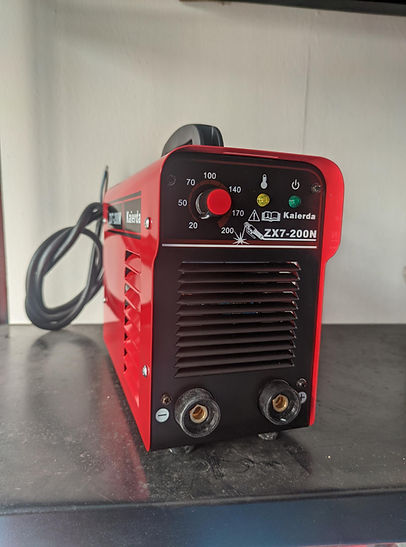
Shipping Welding Equipment Internationally from China

국제 배송을 위해 상품을 보낼 수 있도록 중국의 공급 업체에 중국 창고 주소를 제공하십시오.
About buying Welding Equipment from China
About Buying Welding Equipment from China
China has become one of the world's most important manufacturing bases for welding equipment, welding machines, welding accessories, and industrial metalworking products. From compact inverter welders for workshops to automated welding systems for factories, Chinese manufacturers offer a wide range of equipment at highly competitive prices.
For importers, distributors, contractors, fabrication companies, workshops, and industrial buyers, buying welding equipment from China can provide significant cost savings and access to a broad selection of products. However, successful sourcing involves much more than finding the lowest-priced welding machine. Buyers need to evaluate technical specifications, welding processes, electrical requirements, certifications, quality control, spare parts, packaging, warranty support, and the total landed cost.
This guide explains how to buy welding equipment from China, what types of welding equipment are available, how to select reliable Chinese suppliers, what specifications to compare, how to manage quality control, and how to ship welding machines internationally.
Why Buy Welding Equipment from China?
One of the biggest reasons companies source welding equipment from China is manufacturing cost.
Chinese manufacturers operate large-scale production facilities and supply both domestic and international markets. This allows many factories to produce welding machines, components, accessories, and related equipment at competitive prices.
Competitive Pricing
Chinese welding equipment can often be significantly less expensive than comparable equipment manufactured in higher-cost production markets.
The price advantage can be particularly attractive when purchasing:
Multiple welding machines
Equipment for resale
Workshop equipment
Industrial welding systems
Welding accessories
Replacement parts
Private-label products
OEM equipment
However, the cheapest quotation is not necessarily the cheapest solution. A low-cost machine with poor components, limited support, or unreliable performance can become more expensive over its lifetime.
Wide Product Selection
Chinese suppliers manufacture almost every major category of welding equipment.
Buyers can source:
MIG welders
TIG welders
Stick welders
Multi-process welders
Plasma cutters
Spot welders
Laser welding machines
Submerged arc welding equipment
Stud welding equipment
Welding positioners
Welding automation systems
Robotic welding systems
Welding fume extractors
Welding tables
Welding accessories
This makes China particularly attractive for companies looking for several types of equipment from one sourcing market.
OEM and Private Label Manufacturing
Many Chinese manufacturers offer OEM and ODM services.
This means a buyer may be able to purchase an existing machine platform and customize:
Brand name
Logo
Machine color
Control panel
Packaging
User manual
Product labeling
Accessories
Electrical configuration
Software
Product specifications
For distributors and importers, private-label manufacturing can provide an opportunity to develop a dedicated product range without designing a welding machine from scratch.
Types of Welding Equipment Available from China
Before contacting suppliers, buyers should determine which welding process and equipment type best matches their application.
1. MIG Welding Machines
MIG, or Metal Inert Gas welding, is widely used for welding steel, stainless steel, aluminum, and other metals.
MIG welders are popular in:
Automotive repair
Metal fabrication
Construction
Manufacturing
Machinery repair
Workshops
When sourcing MIG welding machines, pay attention to wire diameter compatibility, duty cycle, output current, shielding gas requirements, wire feeding system, and supported materials.
2. TIG Welding Machines
TIG, or Tungsten Inert Gas welding, is valued for producing precise and clean welds.
TIG machines are commonly used for:
Stainless steel
Aluminum
Precision fabrication
Pipe welding
Automotive applications
Aerospace-related manufacturing
Decorative metalwork
Buyers should determine whether they need AC TIG, DC TIG, or an AC/DC TIG machine.
AC/DC TIG machines are particularly useful when aluminum welding is required.
3. Stick Welding Machines
Stick welding, also known as MMA or SMAW, uses consumable electrodes.
These machines are relatively simple and are commonly used in:
Construction
Field repairs
Agricultural equipment
Structural fabrication
Maintenance work
General workshops
One major advantage of stick welding equipment is its portability and relatively simple setup.
4. Multi-Process Welding Machines
Multi-process welders combine several welding processes into one machine.
A typical machine may support:
MIG
TIG
MMA/Stick
These machines can be attractive to workshops that need flexibility without purchasing separate machines.
However, buyers should verify the actual performance of each welding mode rather than assuming that every process performs equally well simply because it is listed in the specifications.
5. Plasma Cutters
Plasma cutting equipment uses a plasma arc to cut electrically conductive materials.
Chinese manufacturers offer plasma cutters for applications ranging from small workshops to industrial fabrication.
Important specifications include:
Maximum cutting thickness
Recommended cutting thickness
Output current
Duty cycle
Air pressure
Air consumption
Cutting speed
Torch type
Consumable availability
The advertised maximum cutting thickness should not automatically be treated as the machine's ideal continuous operating thickness.
6. Spot Welding Machines
Spot welding machines are widely used for joining sheet metal.
They are particularly common in:
Automotive manufacturing
Automotive repair
Sheet-metal fabrication
Appliance manufacturing
Metal furniture production
When buying spot welders, consider electrode configuration, welding current, pressure system, cooling system, material thickness, and cycle time.
7. Laser Welding Machines
Laser welding has become increasingly popular for precision metal fabrication.
Chinese suppliers offer handheld laser welders as well as more automated laser welding systems.
Laser welding equipment can be used for:
Stainless steel
Carbon steel
Aluminum
Galvanized materials
Metal cabinets
Kitchen equipment
Automotive components
Industrial fabrication
Because laser welding equipment can involve significant power, optical, cooling, and safety requirements, buyers should conduct considerably more technical due diligence than they would for a basic stick welder.
8. Robotic Welding Systems
Chinese manufacturers also supply automated and robotic welding systems.
These systems may include:
Welding robots
Welding power sources
Positioners
Fixtures
Controllers
Safety enclosures
Wire feeders
Automated material handling
Robotic welding is generally more appropriate for high-volume production environments where repeatability and labor efficiency justify the initial investment.
9. Submerged Arc Welding Equipment
Submerged arc welding is commonly used for heavy-duty industrial applications.
It can be suitable for:
Steel structures
Pressure vessels
Pipelines
Heavy machinery
Shipbuilding
Large fabricated components
When sourcing this equipment, buyers should evaluate the complete system rather than only the welding power source.
Key Specifications to Compare When Buying Welding Equipment
Comparing welding machines based only on amperage and price can lead to poor purchasing decisions.
A better approach is to evaluate the entire specification sheet.
Welding Current
The output current range determines what applications the machine can handle.
For example, a small workshop welder may have a substantially lower operating range than an industrial welding power source.
Do not assume that a machine advertised as having a very high maximum amperage will necessarily deliver that output continuously.
Duty Cycle
Duty cycle is one of the most important specifications for professional welding equipment.
It describes how long a machine can operate at a particular output level during a specified test period before requiring cooling.
For industrial applications, duty cycle can be more important than the headline maximum amperage.
Always ask the supplier:
At what current and voltage is the stated duty cycle measured?
Also confirm the applicable testing standard.
Input Voltage
Electrical requirements must be checked before ordering.
Common configurations may include:
110V
120V
220V
230V
380V
Single phase
Three phase
The required electrical configuration depends on the destination market and application.
Never assume that a machine designed for the Chinese domestic market can simply be connected to the electrical system in another country.
Frequency
Buyers should also check whether the machine supports:
50 Hz
60 Hz
50/60 Hz
This can be particularly important when importing equipment internationally.
Welding Processes
Confirm exactly which processes the machine supports.
For a multi-process machine, ask whether all advertised modes are fully functional or whether certain functions require optional accessories.
Wire Diameter
For MIG equipment, check supported wire sizes.
Typical wire diameters can include:
0.6 mm
0.8 mm
1.0 mm
1.2 mm
1.6 mm
The correct range depends on the machine and application.
Electrode Compatibility
For MMA/Stick welders, determine which electrode sizes and types can be used.
This can affect the machine's usefulness for different applications.
Cooling System
Higher-powered welding equipment may require:
Fan cooling
Water cooling
Industrial cooling systems
Laser welding equipment in particular may require a dedicated chiller.
Cooling requirements should be considered before purchasing because they affect both installation and operating costs.
How to Find Reliable Welding Equipment Manufacturers in China
Finding suppliers is relatively easy. Finding the right supplier is much harder.
Potential sourcing channels include:
Alibaba
Global B2B marketplaces
Chinese manufacturing directories
Industry exhibitions
Direct factory websites
Sourcing agents
Referrals from industry contacts
The objective should not simply be to find the supplier with the lowest quotation.
Instead, evaluate the supplier's manufacturing capability, export experience, product quality, technical knowledge, and after-sales support.
Manufacturer vs Trading Company
Chinese welding equipment sellers generally fall into two broad categories: manufacturers and trading companies.
Buying Directly From a Manufacturer
Advantages can include:
Lower factory pricing
Better customization
Direct technical communication
Easier OEM development
Greater control over production
Better access to spare parts
However, some factories may have limited export or customer-service capabilities.
Buying From a Trading Company
A trading company may provide:
Multiple brands
Multiple equipment categories
Easier communication
Consolidated purchasing
Export assistance
Supplier coordination
Trading companies can be useful when buying different products from different manufacturers.
The important question is not simply whether the supplier is a factory. The important question is whether the supplier is capable of reliably delivering the equipment you require.
Questions to Ask Chinese Welding Equipment Suppliers
Before placing an order, ask suppliers for detailed information.
Useful questions include:
Are you the manufacturer or a trading company?
How long have you manufactured this equipment?
Which countries do you export to?
What is the rated duty cycle?
What input voltage and frequency are supported?
What welding processes are supported?
Which components and brands are used?
What is the expected service life?
Are replacement parts readily available?
What warranty is provided?
Is technical support available?
Can you provide operation manuals?
Can you provide wiring diagrams?
Can you provide test videos?
Can you conduct a factory demonstration?
Can the machine be customized?
What certifications are available?
How is the machine packaged for export?
What is the production lead time?
What are the recommended spare parts?
A supplier that gives vague answers to basic technical questions should be evaluated carefully.
Request a Sample or Demonstration
For expensive welding equipment, purchasing based only on photographs and specifications is risky.
Whenever practical, request a demonstration.
Ask the supplier to weld the actual materials and thicknesses you intend to process.
For example, if you will use the machine for stainless steel fabrication, ask the supplier to demonstrate stainless steel welding rather than demonstrating only mild steel.
For automated equipment, request a production test using your actual workpiece or a comparable sample.
Test the Welding Equipment Before Shipment
Pre-shipment testing can identify problems before the equipment leaves China.
Depending on the product, testing may include:
Power-on testing
Output-current testing
Welding performance
Duty-cycle testing
Wire-feeding testing
Cooling-system testing
Torch operation
Control-panel testing
Alarm testing
Safety-function testing
Software testing
Accessory verification
For large commercial orders, independent pre-shipment inspection can provide an additional layer of quality control.
Quality Control When Buying Welding Equipment From China
Quality control should begin before production rather than after the equipment arrives.
A good quality-control process may include:
Supplier Qualification
Check the supplier's:
Factory information
Production capabilities
Export experience
Certifications
Product history
Customer references
Factory facilities
Sample Approval
Approve a specific sample or production configuration before mass production.
Production Inspection
For larger orders, inspect production while the machines are being manufactured.
Final Inspection
Before shipment, verify:
Quantity
Model numbers
Specifications
Accessories
Packaging
Labels
Manuals
Machine operation
Cosmetic condition
This is particularly important for private-label orders.
Certifications and Compliance
Welding equipment is electrical machinery, so regulatory requirements should be investigated before importing.
Depending on the destination market and equipment type, buyers may encounter requirements related to:
Electrical safety
Electromagnetic compatibility
Machinery safety
Product labeling
Environmental requirements
Laser safety
Local electrical standards
European buyers may need to consider CE-related requirements, while other markets may have their own certification or conformity requirements.
Do not simply accept a supplier's statement that a product is "CE certified."
Ask for the relevant documentation and determine whether the certification actually applies to the exact model being purchased.
For laser welding equipment, safety requirements can be substantially more demanding because of the hazards associated with high-power laser radiation.
Welding Equipment Price From China
The purchase price depends heavily on the equipment type and specifications.
A basic inverter welding machine may cost relatively little, while an industrial robotic welding cell or laser welding system can cost many thousands of dollars.
Factors affecting price include:
Welding power
Machine type
Components
Brand
Automation level
Cooling system
Welding torch
Wire feeder
Control system
Software
Accessories
Customization
Certifications
Packaging
Order quantity
When comparing quotations, make sure suppliers are quoting equivalent specifications.
A $1,000 machine and a $1,300 machine may appear comparable until you discover that the more expensive model includes significantly better components, a higher duty cycle, additional accessories, and better warranty coverage.
Calculate the Total Landed Cost
The supplier's factory price is only one part of the purchasing cost.
Your total landed cost can include:
Product Cost + Domestic China Charges + Export Charges + Packaging + Freight + Insurance + Customs Duty + Import Taxes + Customs Clearance + Destination Charges + Delivery
This is particularly important for heavy welding machines.
A machine that appears inexpensive at the factory may become significantly more expensive after international transportation and import costs are included.
Packaging Welding Equipment for International Shipping
Welding equipment is often heavy and contains sensitive electrical and electronic components.
Proper export packaging is therefore essential.
Depending on the equipment, packaging may include:
Export cartons
Foam protection
Wooden cases
Wooden crates
Pallets
Moisture protection
Shock protection
Protective film
Heavy industrial machines should be secured properly to prevent movement during transportation.
If wooden packaging is used, verify that the wood complies with the applicable international treatment requirements.
Shipping Welding Equipment From China
The best shipping method depends on the equipment's size, weight, value, and urgency.
Air Freight
Air freight may be suitable for:
Small welding machines
Samples
Urgent spare parts
Compact equipment
Its main disadvantage is cost, especially for heavy equipment.
Sea Freight
Sea freight is often more economical for:
Large orders
Heavy welding machines
Industrial equipment
Robotic systems
Laser welding systems
Multiple machines
Depending on the shipment volume, buyers can use:
LCL shipping
FCL shipping
LCL can be useful when the shipment does not fill a container, while FCL may become more economical for larger volumes.
Consolidating Multiple Purchases
If you are purchasing welding equipment along with other products from different Chinese suppliers, consolidation can reduce logistical complexity.
A freight forwarder with a China warehouse can receive goods from multiple suppliers, consolidate them, inspect packaging, and arrange international transportation.
For example, CNXtrans can be used by importers who need to consolidate purchases from different Chinese suppliers and arrange door-to-door international shipping.
Incoterms When Buying Welding Equipment
Chinese suppliers may offer several different Incoterms.
EXW
Under EXW, the buyer generally takes responsibility for arranging transportation from the supplier's premises onward.
This can provide control over logistics but requires more coordination.
FOB
With FOB, the supplier generally handles delivery to the agreed port and export-related processes within the scope of the Incoterm, while the buyer arranges the main international transportation and subsequent costs.
CIF
CIF includes certain costs associated with transporting the goods to the destination port, but it does not necessarily mean that the goods will be delivered to your final address.
DDP
DDP can be attractive for buyers who want a door-to-door solution where the logistics provider handles import procedures and applicable duties and taxes within the agreed service scope.
However, buyers should always confirm exactly what is included in a DDP quotation.
Customs and Importing Welding Equipment From China
Import requirements depend on the destination country and the specific equipment.
Before ordering, determine:
HS code
Import duty
VAT/GST or other import taxes
Customs documentation
Product certification
Electrical compliance
Labeling requirements
Import permits, if applicable
Typical commercial documents may include:
Commercial invoice
Packing list
Bill of lading or air waybill
Certificate of origin where required
Product documentation
Certification documents
Import declaration information
The correct HS classification is particularly important because customs duties and regulatory requirements can depend on the classification.
Spare Parts and After-Sales Support
One of the most overlooked factors when buying welding equipment from China is long-term support.
A welding machine is not useful if a relatively inexpensive component causes the machine to remain out of service for weeks.
Before purchasing, ask whether the supplier can provide:
Replacement circuit boards
Fans
Switches
Welding torches
Wire feeders
Motors
Consumables
Nozzles
Electrodes
Sensors
Cooling components
Control panels
For larger industrial equipment, consider purchasing a spare-parts package at the same time as the machine.
Warranty Considerations
Read the warranty terms carefully.
Questions to ask include:
How long is the warranty?
Which components are covered?
Who pays shipping for replacement parts?
Does the supplier provide remote troubleshooting?
How quickly are replacement parts shipped?
Is labor covered?
What happens if the machine cannot be repaired locally?
For imported equipment, international warranty support can be very different from buying locally.
Common Mistakes When Buying Welding Equipment From China
Choosing Based Only on Price
The lowest quotation may not provide the lowest total cost of ownership.
Not Checking Electrical Compatibility
Ordering the wrong voltage or frequency can make equipment unusable without modification.
Ignoring Duty Cycle
A machine may have impressive maximum output specifications but poor continuous performance.
Not Testing Samples
A machine can look excellent in photographs while performing poorly in actual welding applications.
Assuming All Certifications Are Equal
Certification documentation should be verified against the exact model and intended market.
Not Planning for Spare Parts
A machine may become difficult to maintain if replacement components are unavailable.
Underestimating Shipping Costs
Heavy machinery can generate substantial freight and destination charges.
Poor Packaging
Damage during transportation can turn a good purchase into an expensive problem.
Failing to Specify the Exact Configuration
Buyers should document the precise machine model, components, accessories, electrical configuration, branding, and packaging requirements.
How to Reduce the Cost of Buying Welding Equipment From China
There are several legitimate ways to reduce sourcing costs without simply choosing a lower-quality machine.
Buy in Larger Quantities
Manufacturers may offer better pricing for larger orders.
Compare Multiple Factories
Obtain quotations from several suppliers and compare equivalent specifications.
Consolidate Shipments
Combining several purchases can reduce certain transportation costs.
Negotiate OEM Pricing
If you are developing a private-label product, negotiate the full package rather than only the machine price.
Purchase Spare Parts With the Main Order
Shipping spare parts together with the main equipment can be more economical than ordering them individually later.
Compare Total Landed Cost
Always compare the final delivered cost rather than the factory quotation alone.
Buying Welding Equipment for Wholesale and Resale
Distributors should approach sourcing differently from end users.
If you intend to resell welding equipment, consider:
Target market
Retail price
Dealer margin
Warranty costs
Spare-parts availability
Product packaging
Brand identity
Compliance
User manuals
Local technical support
Replacement parts
Product differentiation
Private labeling can make sense for established distributors, but buyers should first verify that the underlying machine platform is reliable.
Buying Welding Equipment for a Workshop
Workshop buyers should focus on practical application rather than maximum specifications.
Consider:
Materials being welded
Material thickness
Required welding processes
Available electrical supply
Frequency of use
Portability
Duty cycle
Available space
Required accessories
Local repair capability
A versatile multi-process machine may be more useful for a general workshop than several specialized machines.
Buying Industrial Welding Equipment From China
Industrial buyers should conduct a more extensive evaluation.
For large systems, consider:
Production capacity
Cycle time
Automation level
Welding accuracy
Repeatability
Integration requirements
Factory acceptance testing
Installation
Operator training
Maintenance
Spare parts
Software support
Safety systems
Long-term technical support
For expensive automated systems, it can be worthwhile to send an engineer or independent inspection company to the factory before shipment.
How to Buy Welding Equipment From China: Step-by-Step
Step 1: Define Your Application
Determine what materials, thicknesses, production volumes, and welding processes you need.
Step 2: Establish Technical Specifications
Create a detailed specification sheet before requesting quotations.
Step 3: Find Several Suppliers
Compare multiple manufacturers rather than relying on one quotation.
Step 4: Verify Supplier Capabilities
Determine whether the supplier actually manufactures the equipment and has experience exporting to your market.
Step 5: Request Quotations
Ask for detailed quotations with identical specifications.
Step 6: Test the Equipment
Request samples, videos, demonstrations, or factory testing.
Step 7: Verify Certifications
Check applicable compliance requirements for your destination country.
Step 8: Negotiate Commercial Terms
Discuss price, MOQ, lead time, warranty, spare parts, packaging, and Incoterms.
Step 9: Confirm the Purchase Specification
Document the exact model and configuration before production.
Step 10: Conduct Quality Inspection
Inspect the equipment before shipment when appropriate.
Step 11: Arrange International Shipping
Choose air freight, LCL, FCL, or another appropriate transportation method.
Step 12: Prepare for Delivery
For heavy welding equipment, ensure that your receiving location has the necessary unloading equipment, manpower, electrical connections, and installation space.
Welding Equipment From China Buying Checklist
Before placing an order, confirm:
Correct welding process
Correct output range
Correct duty cycle
Correct voltage
Correct frequency
Correct phase configuration
Compatible consumables
Correct accessories
Required certifications
Warranty terms
Spare-parts availability
Technical support
Export packaging
Production lead time
Pre-shipment inspection
HS code
Import duty
Import taxes
Shipping cost
Customs clearance
Final delivery arrangements
Frequently Asked Questions About Buying Welding Equipment From China
Is it safe to buy welding machines from China?
Yes. China has many experienced manufacturers producing welding equipment for international markets. However, supplier quality varies significantly, so buyers should verify specifications, quality, certifications, testing procedures, and after-sales support before purchasing.
Is welding equipment from China good quality?
Chinese welding equipment ranges from basic budget machines to sophisticated industrial systems. Quality depends heavily on the manufacturer, components, quality-control process, and product specification.
Can I buy welding equipment from China for resale?
Yes. Many Chinese manufacturers support wholesale, OEM, ODM, and private-label orders. Resellers should pay particular attention to compliance, warranty support, packaging, spare parts, and product reliability.
Can Chinese welding machines be customized?
Many manufacturers offer customization of branding, colors, packaging, control panels, electrical configurations, accessories, and other specifications.
How do I choose a Chinese welding machine manufacturer?
Compare manufacturers based on product quality, technical specifications, factory capability, export experience, certifications, testing, warranty, spare parts, communication, and total cost—not just price.
How should welding equipment be shipped from China?
Small machines may be suitable for air freight, while heavier equipment is often more economical by sea freight. LCL and FCL are common options for larger shipments.
Do I need to inspect welding equipment before shipment?
For expensive equipment or large commercial orders, pre-shipment inspection is strongly recommended. It provides an opportunity to identify problems before the equipment leaves China.
What should I ask a welding equipment supplier?
Ask about duty cycle, electrical requirements, components, welding processes, certifications, warranty, spare parts, technical support, packaging, lead time, testing, and export experience.
Final Thoughts: Is Buying Welding Equipment From China Worth It?
Buying welding equipment from China can be an excellent sourcing strategy for workshops, manufacturers, contractors, distributors, and industrial buyers.
China offers an unusually broad selection of welding machines and related equipment, ranging from inexpensive inverter welders to sophisticated laser and robotic welding systems. Competitive manufacturing costs and OEM capabilities can make Chinese suppliers particularly attractive for companies purchasing equipment in commercial quantities.
However, successful sourcing depends on looking beyond the initial machine price.
The most important factors are application suitability, technical specifications, supplier reliability, quality control, certification, spare-parts availability, warranty support, packaging, shipping, and total landed cost.
The best Chinese welding equipment supplier is therefore not necessarily the supplier offering the lowest quotation. It is the supplier capable of consistently delivering equipment that performs reliably in your specific application and can be supported throughout its useful life.
For international buyers, logistics should also be considered from the beginning rather than after the equipment has been purchased. Heavy and oversized welding equipment can have very different transportation costs from ordinary consumer products, making proper packaging, freight planning, customs preparation, and final delivery arrangements essential.
With careful supplier selection, proper technical evaluation, pre-shipment quality control, and a well-planned international shipping strategy, buying welding equipment from China can provide substantial value while giving businesses access to a wide range of manufacturing and customization options.
국제 배송을 위해 상품을 보낼 수 있도록 중국의 공급 업체에 중국 창고 주소를 제공하십시오.
Shipping Welding Equipment Internationally from China
Shipping Welding Equipment internationally from China
When buying Welding Equipment from China, manufacturers, factories and suppliers will generally ask you for a shipping agent like CNXtrans to help you with handling the international shipping from China.
They can then have your Welding Equipment sent to your shipping agent’s warehouse in China where they will store, consolidate and handle the international shipping for you.
How CNXtrans can help you with shipping Welding Equipment internationally from China
When shipping Welding Equipment internationally from China, there are 3 shipping modes that CNXtrans can use to ship for you.
Shipping by Air: CNXtrans can help you with shipping your Welding Equipment internationally from China by air. Air shipping is generally the fastest mode of shipping. Air courier shipments will be shipped all the way to your address. Depending on which country you are shipping to, air courier shipping generally takes only about 4-6 days. Another alternative is to ship by air freight. Air freight shipments can either shipped to an airport near you or all the way to your address. Air freight shipments can generally take about 8-12 days.
Shipping by Sea: CNXtrans can help you with shipping your Welding Equipment internationally from China by sea freight. Sea freight shipment is the most cost effective shipping mode for large shipments. For many countries, sea freight shipments can either by shipped to port or all the way to your address (door to door). When shipping a large volume of Welding Equipment internationally from China, sea freight would be the best shipping mode to use in most cases.
Shipping by Train: CNXtrans can help you with shipping your Welding Equipment internationally from China by train (rail freight). When shipping to EU countries, rail freight is one of the most cost effective shipping modes for large shipments. For shipping by rail freight to EU countries, CNXtrans can ship all the way to your address in Europe (full door to door shipping). When shipping a large volume of Welding Equipment internationally from China, rail freight would be one of the best shipping modes to use.
국제 배송을 위해 상품을 보낼 수 있도록 중국의 공급 업체에 중국 창고 주소를 제공하십시오.